
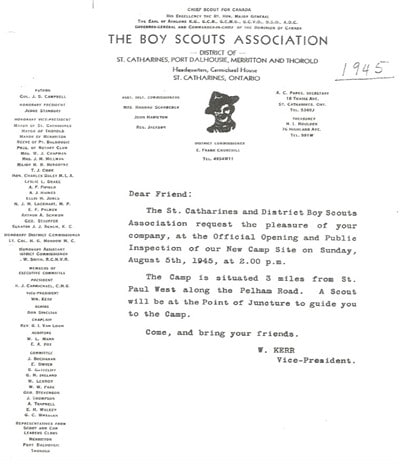
In 1944, the St. Catharines and District Boy Scout was steadily growing, and local leadership decided it was time to look for a larger camp site to accommodate the growing membership. Mr. A.C. Parks found a plot of land available on Effingham Hills and in April 1945 he took Bill Kerr, Mrs. Hannah Schroeder, Frank Churchill, and Vince Goldsworthy Sr. for a tour of the property.
The property was comprised of 88.5 acres and it was for sale for $4000. The District had saved $2000 over the years through Apple Day and other initiatives for the purpose of purchasing a camp and sale of the property was successfully negotiated. The $2000 mortgage required for the purchase of the property was taken care of by Finance Chairman E.H. Walker, who became president of General Motors in Oshawa. He telephoned around to several of his business acquaintances and in about two hours the mortgage was taken care of through generous donations from the community.
The Scouting Community was invited to the camp on August 5, 1945, for an Official Opening and Public Inspection of the camp. Scouts were posted at the top of the road into the camp to guide guests into the facility. The new facility was named Camp Wetaskiwin which means “Hills of Peace” in Cree. The old Millen Hut from Camp Wigwassin was dismantled, brought to Camp Wetaskiwin, and reassembled for use as a storage and dining area. In 1946, efforts were made to enlarge the swimming hole, plant willow trees, and the main bridge into camp was constructed.
In 1947, the St. Catharines Lions Club started construction on a new lodge for the camp. The Lodge was named “Manitouaning” which means “A Place of Meeting.” Lionel Hessen was the Lion’s Club Representative on the District Scout Association. He was the architect of the lodge and the person who over saw its construction. The lodge is 80 feet by 60 feet with a veranda across the front. The Main Hall is 60 feet by 60 feet with a large fireplace in the centre of the south wall. The east side has a fully equipped kitchen with lady’s washrooms and the west side has the men’s washrooms along with a storage area, and Camp Chief’s Office. Behind the lodge is a fully serviced apartment for the camp caretaker. There is also a drilled well for water. The overall cost of the lodge was $18 500 which was a tremendous donation of funds, time, expertise. The lodge was officially opened on July 4, 1948.
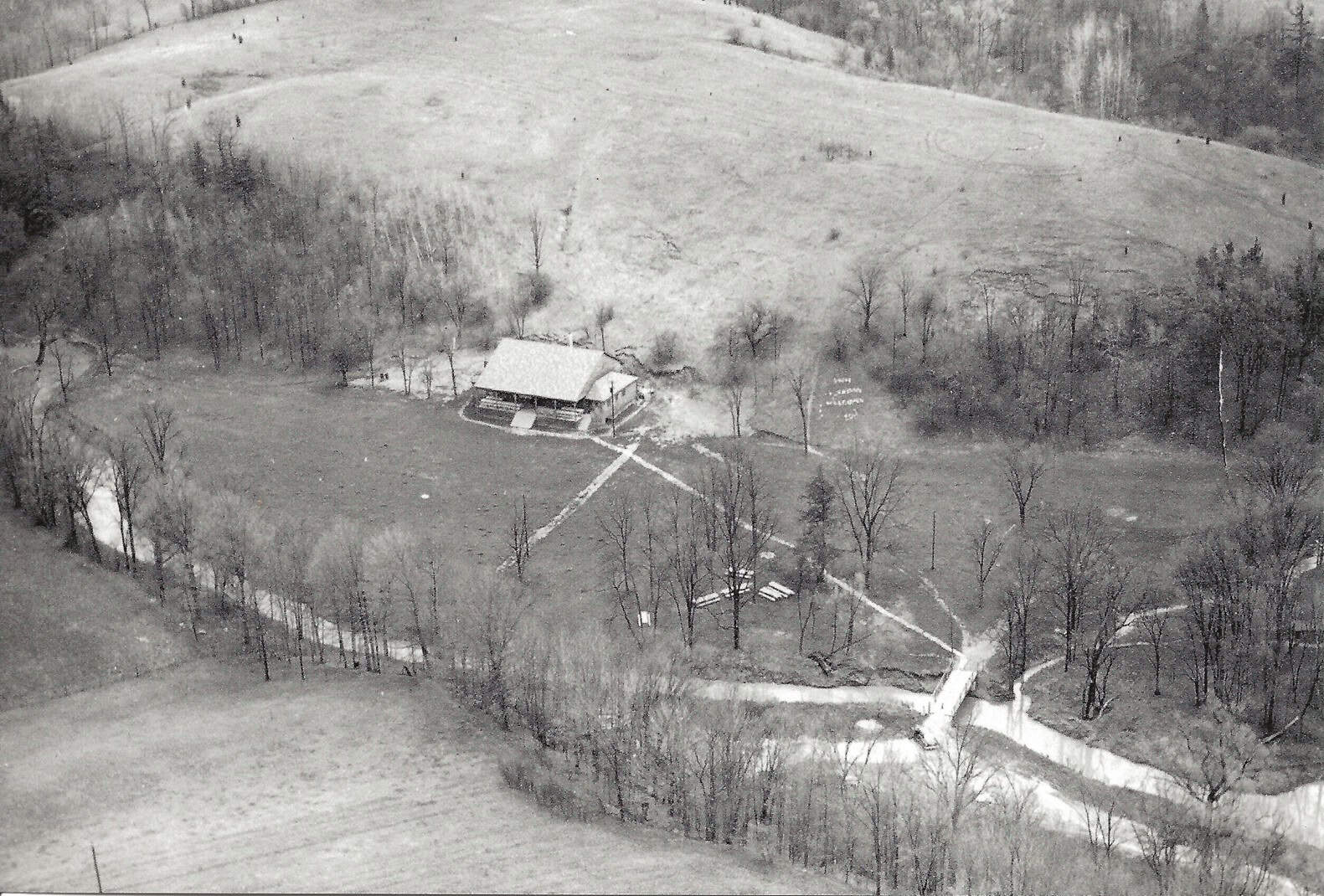
In the early days of the camp, Scouts used to swim in the old swimming hole on the property that had been used by local children for many years. It was not large enough to accommodate the needs of the campers, so each year efforts were made to enlarge it. Unfortunately, it filled back in each year with silt from the spring run – off from above in Short Hills. The location of the swimming hole was along on Site #1 right across from the current Chapel. By 1950, the annual challenges of fixing the swimming hole made it apparent that a permanent swimming pool on the property.
In 1953, The Lions Club made another very generous donation to the camp when they built a swimming pool across from the lodge in main field. Once again, Lionel Hessen was the chief architect and supervisor for this project. The pool cost $5000 to build.
The Medical Officer of Health ordered that the pool would need to have a filtration plant and that the pool would also need to be chlorinated. The filtration plant was built in 1954, and a $1200 donation from the Lion’s Club was secured to help offset the costs. The Medical Officer of Health also advised that a fence be erected around the pool and this was built in 1954 at a cost of another $1200.
In 1951, a three – car garage was built in the camp parking lot to house the new tractor, the car owned by the camp caretaker, and to house supplies for the camp
The Chapel on Site was erected and dedicated in the Fall of 1945 by Reverend Onley. Scouter Arnold Bang helped select the site for the Chapel. The first communion services were held at the Chapel in 1946 by Canon Walter Bagnell who became the Bishop of Niagara. The Chapel was originally in Chapel Valley at the back of the camp where Site 5 is located. Currently, the Chapel is at the entrance to Site 1 and it is dedicated to the memory of Scouter Roger Naylor.
Many bridges at the camp have been built by various Scout Troops over the years. Due to annual flooding, erosion, and other forces of nature, these bridges need to be serviced or rebuilt frequently so that they are safe for all visitors to the camp.
In 1946 local membership was 1200, and by 1960 there were over 2600 youth registered in local Scouting Groups. The Main Hall of the lodge was used mainly to hold instructional sessions like forestry and conservation courses, junior and senior leader courses, and other events that take place in the spring and the fall. From June to September, the lodge was primarily used for Cub Camping, a shelter during inclement weather, a place to hold information sessions, and the camps first aid centre. Only two Cub Packs were able to use the lodge at a given time, and since there were usually six or more Packs in camp at one time, food preparation had to be done over open fireplaces which made things difficult and cumbersome. Dishwashing was also a challenge, and the invasion of insects made eating outdoors awkward.
To help alleviate the strain on the lodge, the Lion’s Club once again made another large donation to the Camp. They designed and built a cooking and dining shelter that can hold over 100 people at a time. The building is fully screened in and it originally had charcoal grills in the centre area. The building cost $8000 and was completed and presented to the camp in 1960. It was named “The Potlatch” which means “Place of Feasting” in the Chinook dialect. Electricity and water were piped to the Potlatch in 1961, and the installation of a large propane gas cooking range allowed for the removal of the charcoal pits.
The Den was erected in 1960 by District Commissioner Tim Timlock just inside the bridge entrance. Originally, the Den was named “A-Ha -Hiua” which means “A Place of Lookout”. The building was erected to house Summer Camp Staff away from the lodge.
The two totem poles at the entrance to the camp were carved under the direction and supervision of Scoutmaster Ben Sowrey, Fred Jordan, and Rusty Villeseche. The carving of the totem poles was an activity of the South Division in 1961. The following Scouts carved the totem poles.
The large camp sign at the entrance to the camp was originally painted by Queen Scout Dave Robins of the 1st Beaverdams Troop in 1961. The sign has been touched up by a variety of volunteers over the years.
No badges or artefacts have been found from the early Scout Camps of local troops or from Camp Wigwassin, but Camp Wetaskiwin has a rich badge history. Below is a sampling of the different events and badges that have been produced for the camp.
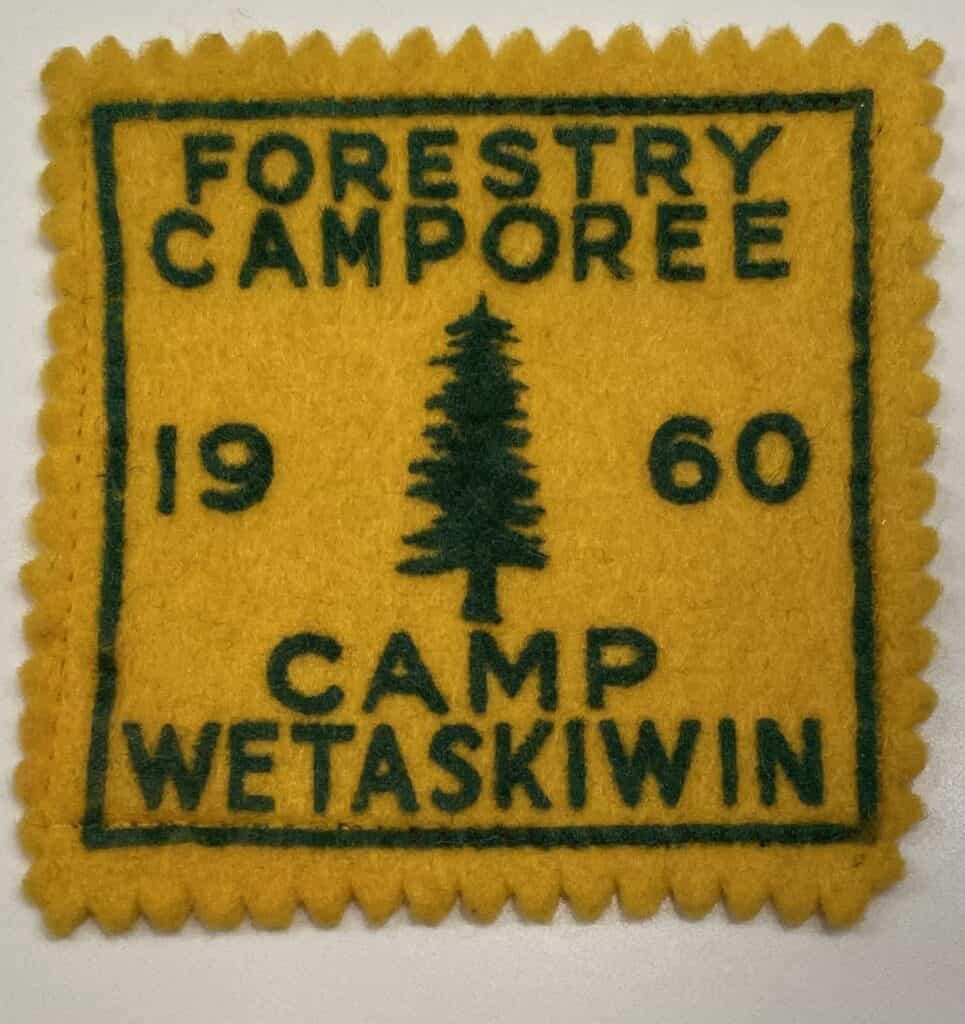
Many early badges of the camp were centered around forestry and conservation activities since the camp used to be a farm, and extensive work was done to plant a new forest.
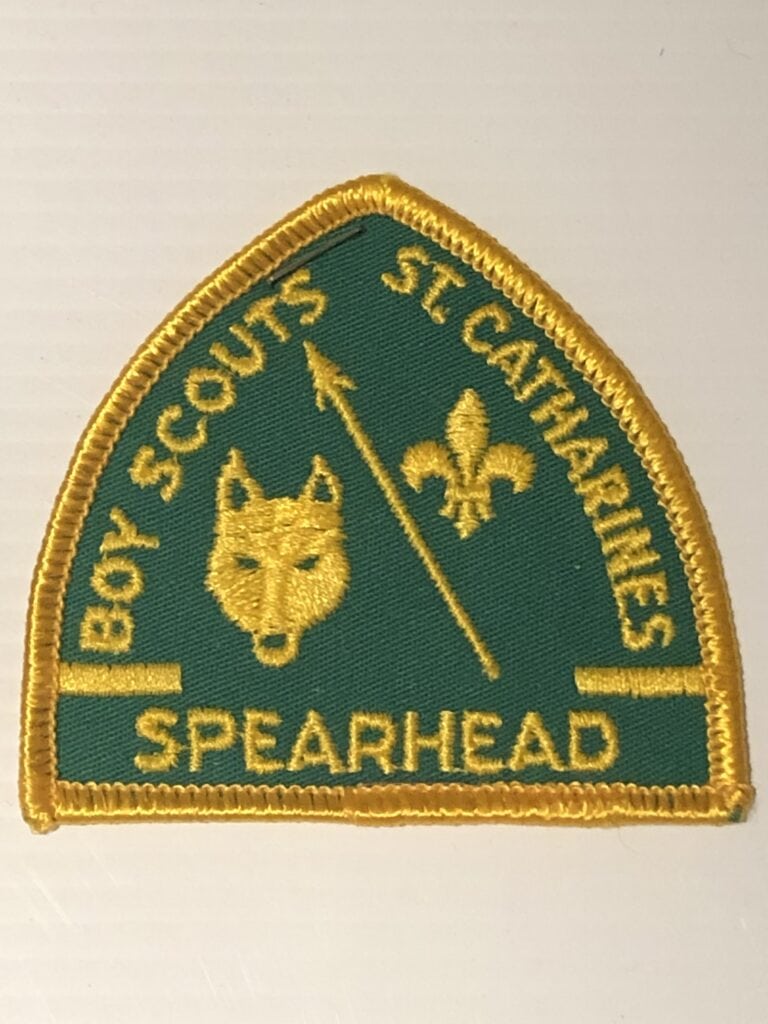
Spearhead Camps were held annually on Labour Day Weekend. Spearhead was a camp for 3rd Year Cubs who were about to move up to Scouts. The Cubs learned the new skills they would need to be ready for Scouting. It was a competition camp and the winning Cub Pack won the Spearhead Speer.
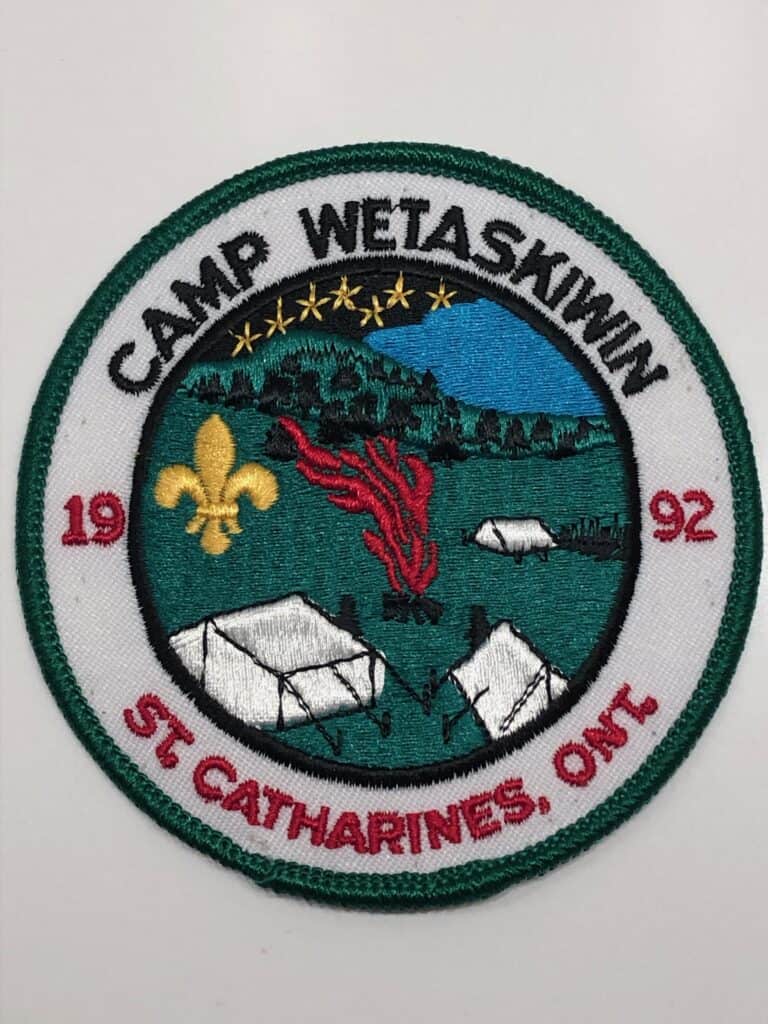
Camp Wetaskiwin badges were created annually from 1956 to 2012 when a generic badge was created. While badges were made for specific events at the camp, over time the annual camp crest predominately became the crest handed out to youth as a recognition of their time at camp.
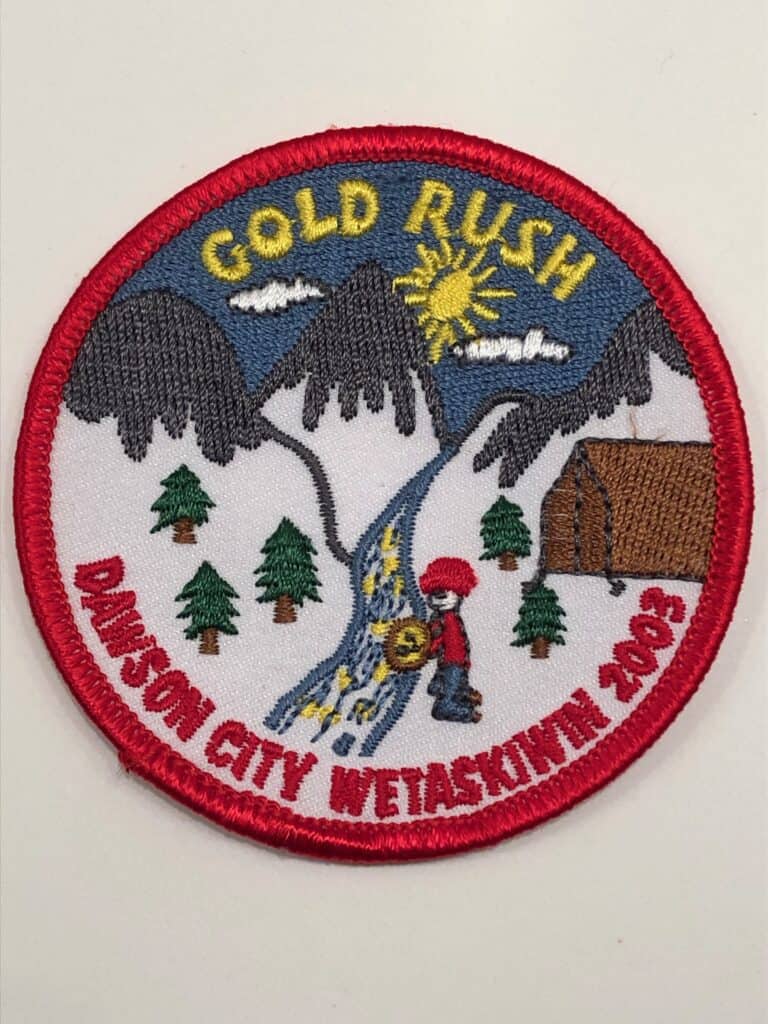
Camp Wetaskiwin Winter Camp Badges were created annually from 1959 to 2012 when a generic winter camp badge was created. Winter camping became more popular in the 1960s when the lodge was fully insulated, and it became available for winter use.
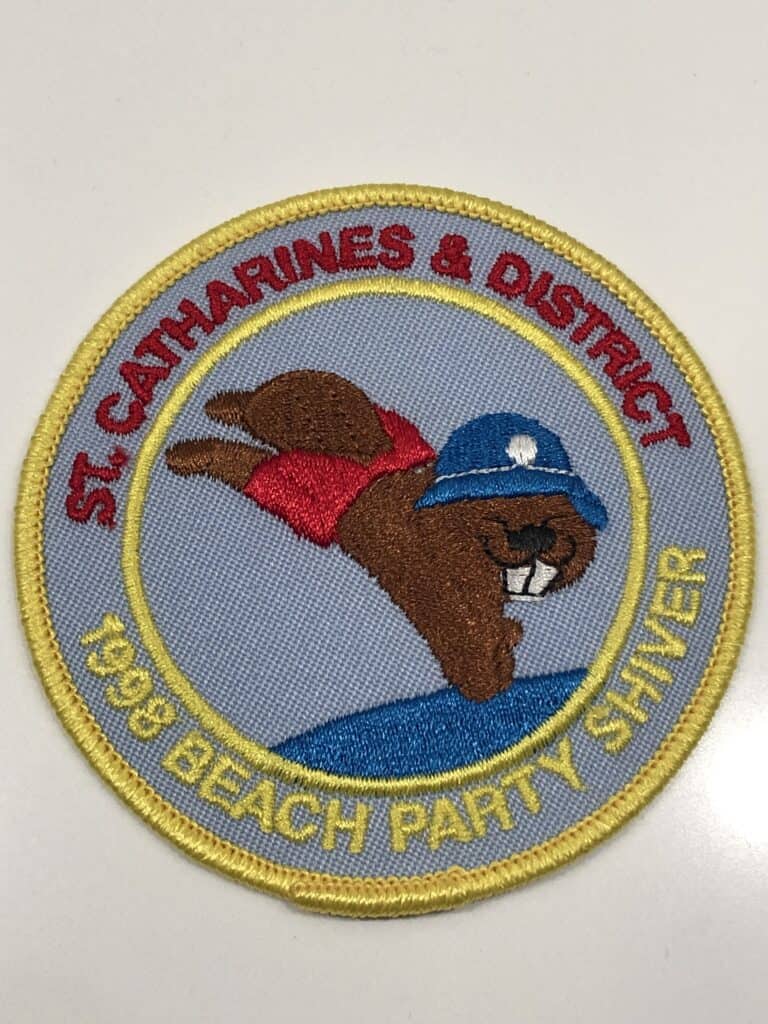
Beaverees and Beaver Shivers have been held at Camp Wetaskiwin since the 1970s.
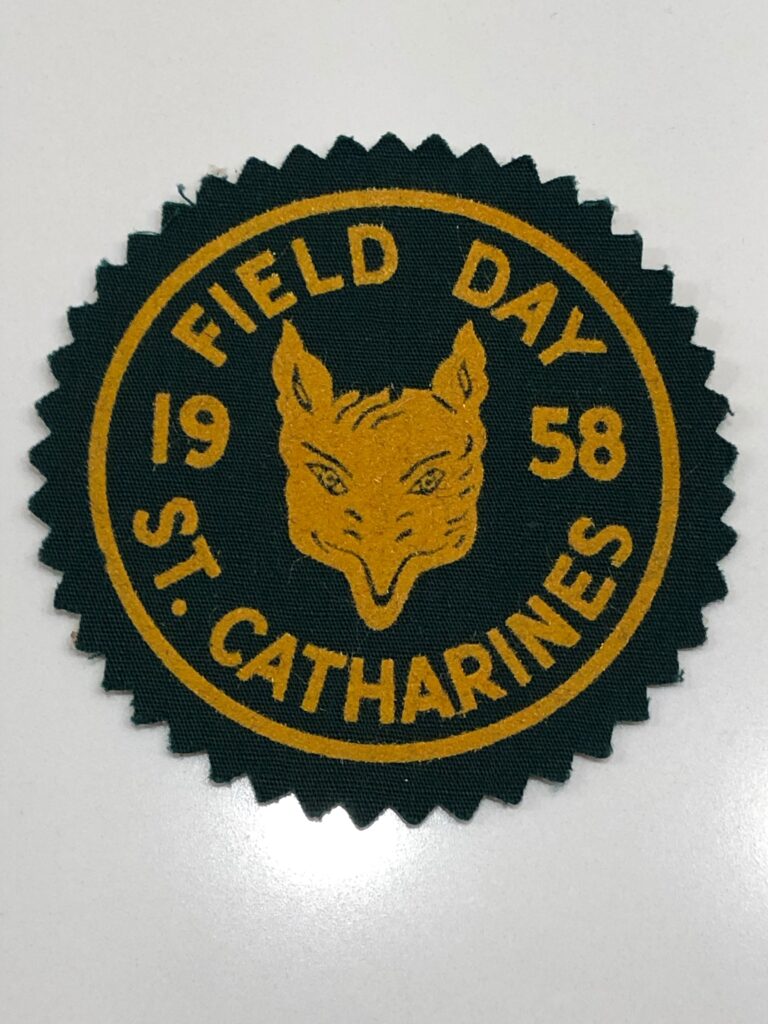
Cuborees have been held at Camp Wetaskiwin since the 1950s. Today, the annual Beaveree is combined with the annual Cuboree to act as a swim-up activity for 3rd Year Beavers who are moving up to Cubs in the Fall.
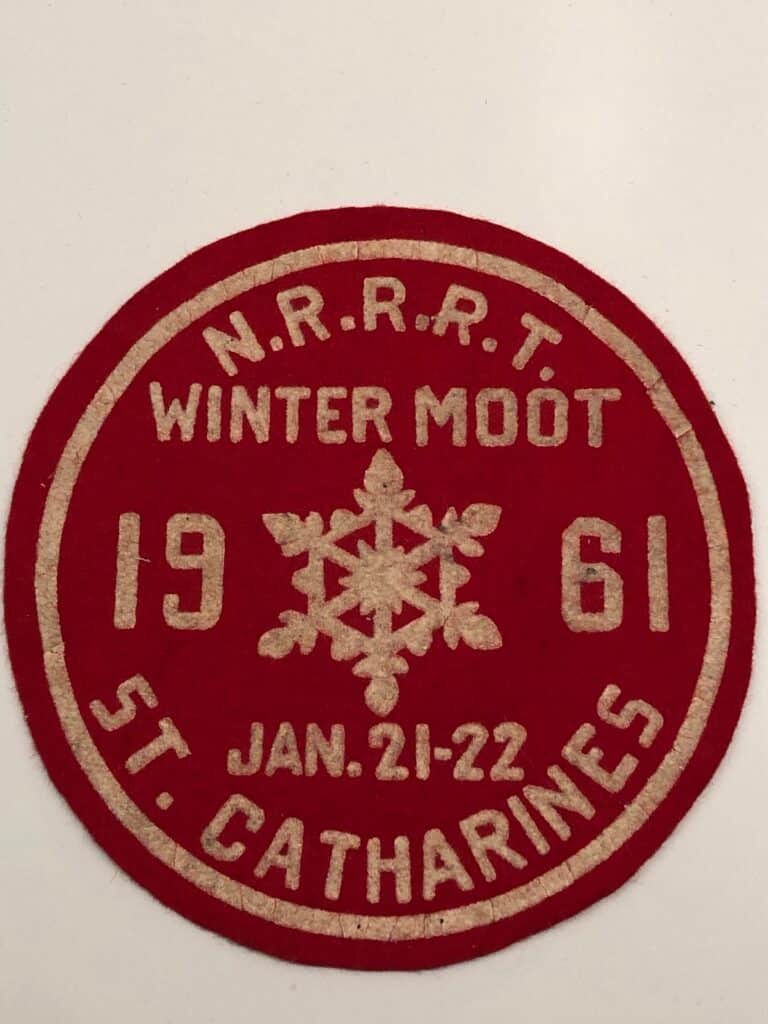
St. Catharines had very active Rover Companies in the 1960s and 1970s that held large Rover Moots at Camp Wetaskiwin.
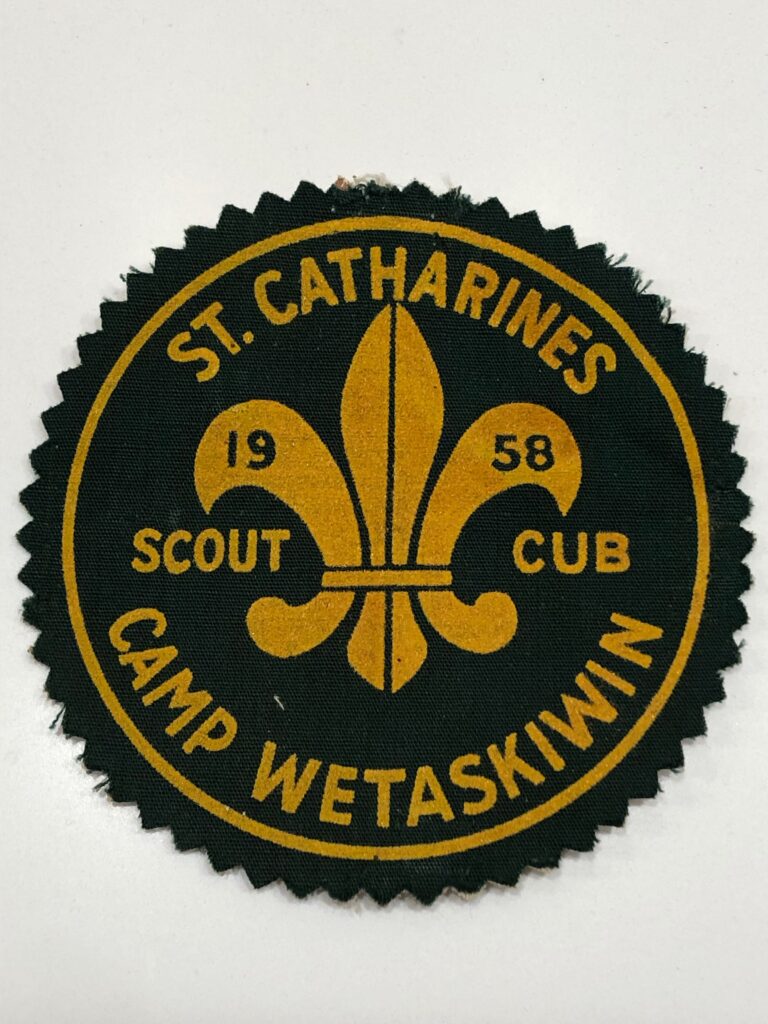
Badges commemorating the 50th, and 60th Anniversaries of Camp Wetaskiwin were made to celebrate each milestone.